Introduction
In today's fast-paced globe, dangerous emergency situations can strike at any moment. Whether you're a healthcare specialist, an educator, or just a person who wants to make a distinction, having Basic Life Support (BLS) certification is important. This qualification encourages individuals with the abilities and expertise required to act promptly and effectively in emergency situations. In this detailed overview, we'll cover every little thing you need to understand CPR Course Darwin about obtaining your BLS accreditation, from recognizing fundamental vs sophisticated life support to understanding public defibrillator usage.
Your Path to BLS Certification: What You Need to Know
Understanding BLS Certification
BLS accreditation is a course made for laypersons and specialists alike that shows vital strategies for reacting to heart attack and other emergencies. It incorporates acknowledging symptoms, doing CPR (cardiopulmonary resuscitation), utilizing an Automated External Defibrillator (AED), and recognizing medical facility codes and protocols.
Who Ought to Get Certified?
Anyone can benefit from BLS certification; nevertheless, it is especially crucial for:
- Healthcare providers Emergency responders Educators Caregivers
Obtaining this accreditation is not almost meeting work needs; it has to do with being prepared to save lives.
The Relevance of Fundamental vs Advanced Life Support
When diving right into the realm of emergency situation care, it's crucial to recognize the distinction between basic life support (BLS) and progressed life assistance (ALS).
Defining Basic Life Support
BLS commonly involves:
- Performing upper body compressions Providing rescue breaths Using an AED
These strategies are fundamental skills that everyone should find out. They supply prompt aid until advanced clinical help arrives.
What is Advanced Life Support?
ALS exceeds the essentials and includes:
- Drug administration Advanced airway management More complicated treatments that require specific training
While ALS is vital in intense medical facility settings, BLS gears up people with the tools they require in everyday scenarios.
Checking Responsiveness: The Primary Step in Emergency Care
One of the very first actions you'll find out in your BLS training is inspecting responsiveness.
How to Check Responsiveness
Approach the person: Ensure your safety and security prior to approaching them. Gently drink their shoulder: Ask loudly if they are okay. Watch for signs of consciousness: If there's no feedback, wage inspecting their breathing.Knowing exactly how to examine responsiveness can figure out the next steps required in an emergency situation situation.
Identifying No Breathing: An Essential Skill
Recognizing when somebody has stopped breathing is vital for efficient intervention.
Signs of No Breathing
Look for upper body increase and fall. Listen for breath sounds. Feel for air on your cheek.If you recognize no breathing, it's time to call for aid and start CPR immediately.
Taking Turns on Compressions: Team Effort Conserves Lives
In instances where several rescuers are present, taking turns on compressions can substantially boost survival prices.

Why It Matters
Continuous high-grade compressions are essential during cardiac arrest treatments. Fatigue can cause reduced efficiency in CPR:
Switch every 2 minutes. Maintain deepness at the very least 2 inches. Keep a price of 100-- 120 compressions per minute.These variables make sure maximum blood flow while reducing fatigue amongst rescuers.
Maintaining Composure Throughout Emergencies
Staying calm in demanding situations is much easier said than done but vital when offering aid.
Strategies for Composure
Take deep breaths prior to intervening. Focus on the task at hand. Remember that every second counts-- act emphatically however calmly.By keeping composure, you boost your chances of performing properly under pressure.
Public Defibrillator Use: A Lifesaving Skill
Automated Outside Defibrillators (AEDs) are coming to be much more prevalent in public spaces-- understanding just how to use one can save lives!
Steps to Use an AED:
Turn on the AED device. Attach pads as indicated by representations on pads or device screen. Follow voice triggers provided by the AED.Many individuals think twice as a result of be afraid of making mistakes; however, these gadgets are created with user-friendly directions that assist you via each step.
Hospital Codes and Protocols: What You Need To Know
Understanding healthcare facility codes and procedures can be invaluable throughout emergency situations-- especially if you're functioning within health care settings or helping professionals.
Common Medical facility Codes
|Code|Suggesting|| ------|---------|| Code Blue|Clinical emergency calling for resuscitation|| Code Red|Fire alert|| Code Pink|Youngster abduction|
Familiarizing on your own with these codes assists guarantee swift interaction during crises.
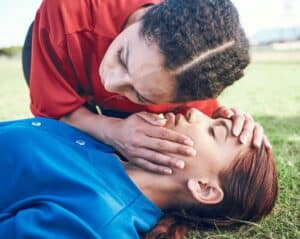
FAQs Regarding BLS Certification
1. What does BLS accreditation entail?
Answer: BLS certification covers crucial lifesaving techniques such as mouth-to-mouth resuscitation, use of AEDs, and exactly how to help choking sufferers-- all essential skills any person might need throughout emergencies.
2. How long does it take to get certified?
Answer: Many BLS training courses take around 4-- 6 hours relying on the company but may vary based upon course dimension or additional parts consisted of in training sessions.
3. Is online training sufficient?
Answer: While online training may offer academic knowledge, hands-on method with monitored Darwin First Aid sessions is important for ability retention-- most companies require functional analyses as part of qualification criteria.

4. Exactly how often do I require recertification?
Answer: Usually every 2 years; nonetheless, some companies might need even more frequent updates based upon transforming standards or business policies.
5. Can I take a course without prior medical knowledge?
Answer: Absolutely! Several programs provide particularly towards novices with no health care history yet furnish them with lifesaving abilities necessary for emergencies!
6. Where can I find accredited courses?
Answer: Certified programs are used through numerous organizations such as American Heart Organization (AHA), Red Cross, or regional community universities-- guarantee they satisfy nationwide standards prior to enrolling!
Conclusion
Your course towards gaining your BLS accreditation outfits you with vital abilities that could mean the distinction between life and death throughout emergencies! From comprehending just how fundamental vs sophisticated life support varies significantly down-to-checking responsiveness accurately before continuing better-- each detail matters exceptionally! By taking positive actions like ending up being familiarized with public defibrillator usage along with medical facility codes/protocols-- you'll not just boost individual self-confidence but potentially save lives too!
So do not wait any kind of much longer; start this gratifying trip today! Be prepared; because having the ability to assist others during defining moments truly makes all the difference!
First Aid Pro | First Aid Course Darwin (RTO 31124) is one of Australia’s leading providers of accredited First Aid and CPR training. We specialise in Basic Life Support, CPR & First Aid, Emergency Response, AED, and many other accredited courses. Our training is both convenient and comprehensive, combining online and face-to-face learning options to suit your needs. Keep your first aid certificates up to date with same-day certification upon completion. Plus, find a lower price, and we’ll instantly beat it by 10%! Conveniently located at Double Tree Hilton, Level 5/116 Esplanade, Darwin City, NT 800. Visit our website for course dates, directions and parking details.
First Aid Pro | First Aid Course Darwin (RTO 31124) is one of Australia’s leading providers of nationally accredited First Aid and CPR training. We deliver a wide range of courses, including Basic Life Support, CPR & First Aid, Emergency Response, AED training, and more. Our courses are designed to be flexible and comprehensive, offering both online and face-to-face learning options to suit your needs. You’ll receive same-day certification upon successful completion, and with our Price Beat Guarantee, if you find a lower price, we’ll beat it by 10%! Our Darwin training venue is conveniently located at DoubleTree by Hilton, Level 5, 116 Esplanade, Darwin City, NT 0800. Visit our website to check upcoming course dates, directions, and parking details, and book your spot today.